Enabling Layered Live Wagers Through Swift Onboarding and Flexible Funding Channels
Greta Neumann · Aug 9, 2026
Enabling Layered Live Wagers Through Swift Onboarding and Flexible Funding Channels
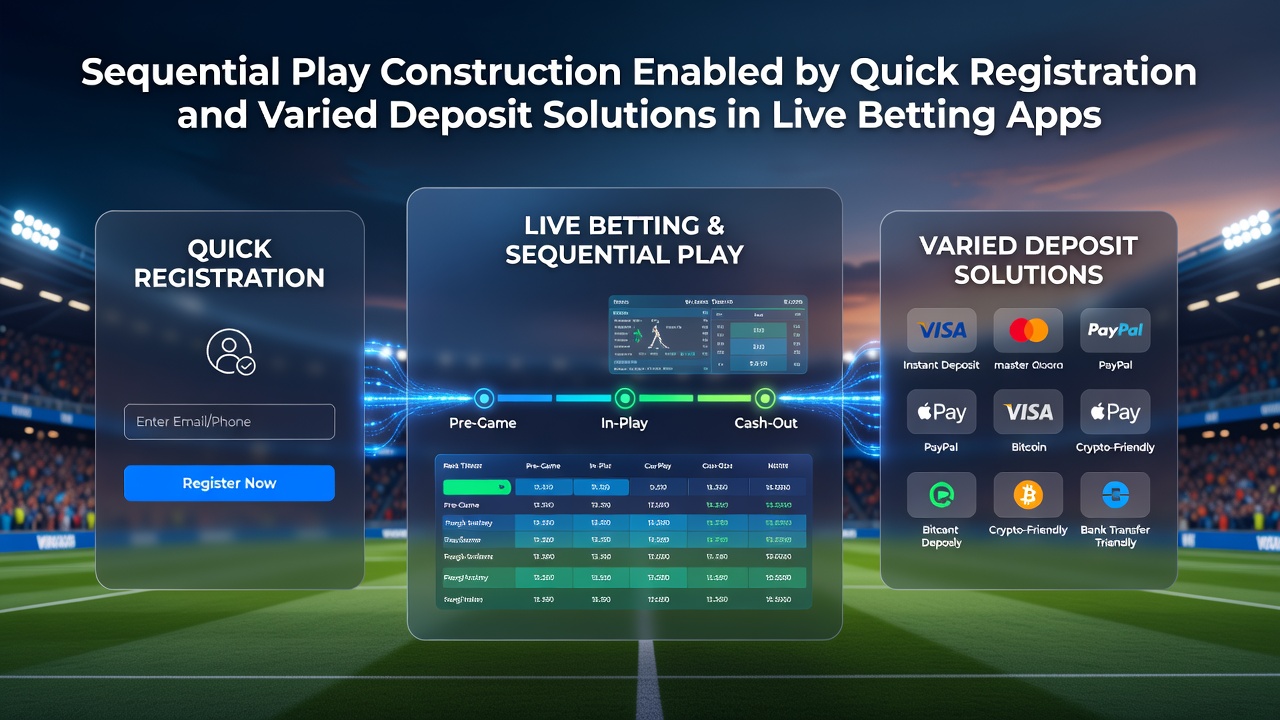
Live betting applications have expanded capabilities for users to construct sequential plays by combining rapid registration steps with an array of deposit methods that support immediate funding across different markets. Observers note that these technical features allow bettors to move from one event to another without delays that previously interrupted chains of activity during ongoing competitions.
Data from industry analyses indicate that registration processes now often complete in under two minutes through integration of identity verification tools such as document scanning and biometric checks. This acceleration stems from regulatory frameworks in various regions that permit streamlined digital onboarding while maintaining compliance standards. Once registered, users gain access to deposit solutions including bank transfers, e-wallets, prepaid cards, and cryptocurrency options that process funds in seconds rather than minutes.
Mechanics of Sequential Play Construction
Sequential plays emerge when bettors place an initial wager on a live soccer match, then shift to a horse racing event using the same funded balance without exiting the application. Research indicates that platforms equipped with instant deposit confirmation reduce the average time between consecutive bets by approximately 40 percent compared to systems reliant on manual processing. Those who study user behavior patterns have documented how varied payment channels accommodate different preferences, such as users favoring privacy-oriented methods alongside traditional banking routes.
Application developers have incorporated APIs that link deposit services directly to betting engines, which enables automatic balance updates visible across multiple sections of the interface. This setup supports construction of layered sequences where an outcome from one market funds participation in another without requiring separate logins or additional verification steps.
Payment Variety and Market Transitions
Varied deposit solutions prove particularly relevant during periods of high activity, such as overlapping international soccer leagues and major racing festivals. Figures from transaction monitoring services reveal that applications offering at least five distinct funding methods experience higher rates of multi-market engagement. Bettors frequently transition between in-play football lines and real-time racing odds because instant funding removes friction points that once forced pauses.

According to reports compiled by the American Gaming Association, mobile platforms in regulated markets have recorded increased cross-category activity following the introduction of unified wallets that consolidate deposits from multiple sources. These wallets maintain separate ledgers for each payment type while presenting a single available balance for immediate use in live environments.
Technical Infrastructure Supporting Rapid Sequences
Backend systems in contemporary live betting apps employ real-time synchronization protocols that update account states across devices within milliseconds of a deposit confirmation. Experts in software architecture have observed that such infrastructure relies on cloud-based processing clusters capable of handling peak loads during major sporting events. Quick registration modules integrate with third-party verification providers, which reduces manual review requirements and accelerates account activation timelines.
By August 2026 several platforms had rolled out enhanced token-based authentication systems that allow returning users to bypass full re-registration when accessing new devices. This continuity further supports sequential betting because historical preferences and funded balances remain accessible without interruption. Industry data shows corresponding growth in session durations when these features combine with diverse deposit pathways.
Regional Variations in Adoption
European operators have emphasized e-wallet integrations that align with local banking regulations, whereas North American platforms often prioritize credit card and ACH options suited to regional preferences. A study released by the Australian Gambling Research Centre examined usage patterns across jurisdictions and found that applications with localized deposit menus recorded higher completion rates for multi-step betting sequences. These differences highlight how payment flexibility adapts to regulatory environments while enabling consistent user experiences.
Security protocols embedded in registration flows incorporate encryption standards that protect user data during both onboarding and subsequent deposit transactions. Compliance teams monitor these processes to ensure alignment with evolving data protection requirements across borders.
Conclusion
Quick registration combined with varied deposit solutions has established technical conditions that facilitate sequential play construction within live betting applications. Market data continues to track how these elements interact during periods of concurrent events, revealing measurable impacts on user navigation between different wagering categories. Ongoing platform refinements focus on maintaining speed and reliability across payment channels as live betting volumes expand globally.